

Doxycycline is a widely used broad‑spectrum antibiotic that remains an important treatment option for many bacterial infections. Below you will find a detailed guide on how it works, when it is used, how to take it correctly, and what to consider if you are planning a doxycycline order online.
Table of Contents
- Doxycycline – drug description and composition
- Pharmacological properties and spectrum of activity
- Where can I buy and order doxycycline online?
- Indications for use
- Contraindications and precautions
- Dosage and administration
- Frequently asked questions about doxycycline
- Doctor’s recommendations for taking doxycycline
Doxycycline – drug description
Trade name: Doxycycline.
This medication is intended for oral use and contains the active ingredient doxycycline hydrochloride, a tetracycline‑class antibiotic. It is supplied mainly as capsules designed for convenient oral administration.
Dosage form: capsules for oral administration, most commonly containing 100 mg or 200 mg of the active substance per capsule.
In addition to the active ingredient, the capsules contain standard pharmaceutical excipients that help stabilize the formulation and ensure proper absorption:
- lactose;
- starch;
- calcium stearate;
- titanium dioxide;
- food colorings.

The exact composition can vary slightly between manufacturers, but the active substance and therapeutic effect remain equivalent when medicines are sourced from licensed pharmacies. Always read the package leaflet that comes with your particular brand of doxycycline and follow the instructions provided by your healthcare professional.
Pharmacological properties
Doxycycline belongs to the group of broad‑spectrum tetracycline antibiotics. It is active against many gram‑positive and gram‑negative bacteria, as well as several atypical pathogens and protozoa. Among the typical organisms sensitive to doxycycline are:
- Staphylococcus spp.;
- Streptococcus spp.;
- pneumococci;
- Haemophilus influenzae;
- Treponema spp.;
- Mycoplasma pneumoniae;
- Chlamydia trachomatis;
- Ureaplasma urealyticum;
- Borrelia recurrentis;
- Propionibacterium acnes and others.
Although the use of tetracyclines in general has been restricted in recent years because of microbial resistance and the potential for adverse reactions, doxycycline remains an important therapeutic option for several infections, particularly when a broad‑spectrum oral antibiotic is required.
Pharmacological action: Doxycycline is a semisynthetic second‑generation tetracycline antibiotic. Its mechanism of action is based on inhibition of protein synthesis inside bacterial cells. By binding to the 30S ribosomal subunit, it blocks the addition of amino acids to the growing peptide chain. This suppresses bacterial growth and helps the immune system clear the infection.

Doxycycline is well absorbed from the gastrointestinal tract, usually within 15–30 minutes after ingestion, with clinically relevant effects appearing within 1–2 hours. It has good tissue penetration and a relatively long half‑life, allowing once‑ or twice‑daily dosing in most treatment regimens.
Where can I buy and order doxycycline?
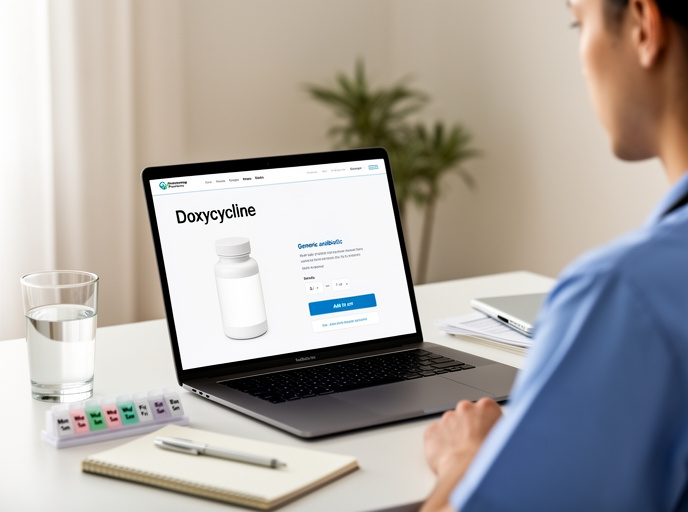
Many patients today prefer the convenience and privacy of online pharmacies when they need to continue a course of antibiotics previously prescribed by their doctor. In some regions it is possible to order doxycycline online from a licensed pharmacy without presenting a paper prescription, especially in settings where an online consultation or prior assessment has confirmed suitability.
When considering a doxycycline order over the internet, pay attention to the following safety points:
- Use only well‑established, licensed pharmacies that clearly display registration details and contact information.
- Check that the website offers pharmacist or doctor support so you can clarify whether doxycycline is appropriate for your condition.
- Ensure that the product description includes strength (for example, 100 mg), dosage form (capsules), manufacturer, and expiry date.
- Choose secure payment methods and verify that the site uses encryption (https in the address bar).
Online pharmacies often allow you to select the desired dosage, compare prices, and arrange home delivery. In many cases, especially on reputable Canadian online pharmacy platforms, costs can be lower while maintaining strict quality controls and timely shipping. Nevertheless, even if you have previously used doxycycline, it is advisable to consult your doctor before starting or repeating a course to confirm that the medicine is still appropriate and safe for your current health status.
Indications for use
Doxycycline is prescribed for adults and for children over 8 years of age for a wide range of infections affecting different organs and systems. Typical indications include:
- Respiratory infections: bronchitis, pneumonia, pharyngitis, tonsillitis.
- ENT diseases: otitis, sinusitis, tonsillitis.
- Urinary tract infections: cystitis, pyelonephritis, prostatitis.
- Gynecological infections: endometritis, cervicitis, adnexitis (usually as part of combination therapy).
- Sexually transmitted infections: chlamydia, syphilis, gonorrhea, ureaplasmosis.
- Gastrointestinal infections: cholecystitis, enterocolitis, dysentery.
- Skin and soft tissue infections: post‑bite inflammation, wound infections, severe acne.
Additionally, doxycycline can be used to prevent and treat certain serious or rare infections, such as malaria, tularemia, anthrax, plague, brucellosis, typhus, whooping cough, Q fever and others, according to specific medical indications and national guidelines.
Contraindications and precautions
Doxycycline is not suitable for everyone. It is contraindicated in the following situations:
- pregnancy (risk of teratogenic effects and impaired fetal bone and tooth development);
- breastfeeding (the drug passes into breast milk);
- children under 8 years of age (risk of impaired bone growth and permanent tooth discoloration);
- known hypersensitivity to doxycycline or other tetracycline antibiotics;
- severe liver or kidney failure;
- porphyria.
The medication should be used with particular caution in patients with mild to moderate hepatic or renal impairment, myasthenia gravis, and in those who are taking other medicines with potential hepatotoxicity. Before placing a doxycycline order, you should review your full medication list with a doctor or pharmacist so they can identify possible drug interactions or risks.

Dosage and administration
Form: most commonly 100 mg or 200 mg capsules.
The capsules are taken orally with a sufficient amount of water (at least 100 ml). To reduce the risk of irritation of the esophagus, it is recommended to take the medicine while sitting or standing and to avoid lying down for at least 30 minutes after swallowing the capsule.
General directions for use:
- It is preferable to take doxycycline with food to minimize gastrointestinal side effects such as nausea or abdominal pain.
- Do not take the capsules with milk or immediately together with antacids, as this can significantly reduce absorption.
- Maintain regular dosing intervals to keep stable blood levels of the antibiotic.
Adults and children over 12 years of age (weight > 50 kg):
- First day: 200 mg in 1–2 divided doses.
- Thereafter: 100 mg once daily.
- For severe infections: 200 mg daily throughout treatment.
Special regimens:
- Gonorrhea: 300 mg once, then 100 mg every 6 hours or according to an individualized schedule.
- Syphilis: 300 mg daily for 10 days.
- Malaria prophylaxis: 100 mg daily, starting 1–2 days before travel, throughout the period of exposure, and for 4 weeks after return.
Children 8–12 years old (weight < 50 kg):
- First day: 4 mg/kg per day.
- Then: 2 mg/kg per day (in 1–2 divided doses).
- For severe infections: 4 mg/kg per day for the entire course.
The onset of action is usually 1–2 hours after administration. The typical duration of therapy is 5–10 days, though in chronic infections treatment may last up to 4 weeks. Never change the dose or duration on your own; follow the schedule prescribed by your healthcare provider.
Frequently asked questions about doxycycline
1. When does doxycycline start to work?
Absorption begins within 15–30 minutes after ingestion, and many patients notice clinical improvement within 1–2 hours. However, to completely suppress the infection and prevent relapse, it is essential to complete the full prescribed course even if you feel better earlier.
2. Can I take doxycycline on an empty stomach?
Doxycycline can technically be taken before or after meals. Taking it on an empty stomach, however, may increase the risk of stomach irritation, heartburn or nausea. For most people it is more comfortable to take the capsule with food and plenty of water.
3. Can I take doxycycline with milk?
No. Dairy products and supplements containing calcium, magnesium, iron or aluminum (for example antacids and some vitamin preparations) bind doxycycline in the gut and reduce its absorption. Leave at least a two‑hour gap between these products and your dose of doxycycline.
4. What if I miss a dose?
If you forget a dose, take it as soon as you remember. If it is almost time for your next dose, skip the missed one and continue with your normal schedule. Do not take a double dose to compensate for a forgotten capsule.
5. Can I drink alcohol while taking doxycycline?
Alcohol is not recommended during doxycycline therapy. It can lower the antibiotic concentration in the blood and increase the burden on the liver, raising the risk of side effects. Ideally you should avoid alcohol completely during treatment and for at least 48 hours after the last dose.
6. Can I take doxycycline if I am pregnant or breastfeeding?
No. Doxycycline is contraindicated in pregnant and breastfeeding women because it crosses the placenta and enters breast milk, potentially interfering with normal bone and tooth development in the child.
7. Why is doxycycline not given to children under 8 years of age?
Tetracycline antibiotics can cause permanent tooth staining and slow bone growth in young children. For this reason, doxycycline is only prescribed to children aged 8 years and older when clearly indicated, and always under medical supervision.
8. What side effects can occur?
Common side effects include nausea, heartburn, abdominal discomfort, diarrhea, mild rash and increased sensitivity to sunlight. More rarely, allergic reactions, liver dysfunction or changes in blood counts may occur. If you experience severe symptoms such as extensive rash, difficulty breathing, intense abdominal pain, yellowing of the skin or dark urine, stop taking the medicine and seek medical help immediately.
9. Should I take probiotics with doxycycline?
Because antibiotics can disrupt the natural intestinal microflora, many clinicians recommend taking probiotics during and after therapy. Products such as Enterol or other probiotic supplements can be taken 2–3 hours after the antibiotic dose and continued for 1–2 weeks after completing the course to reduce the risk of diarrhea and bloating.
10. How should I store doxycycline?
Store the capsules at room temperature (up to about 25 °C) in a dry place, protected from direct light and out of the reach of children. Do not use the medication after the expiry date indicated on the package.
11. Can I sunbathe during treatment?
It is not recommended. Doxycycline increases the skin’s sensitivity to ultraviolet radiation (photosensitivity). Avoid direct sunlight and tanning beds during treatment and for about five days after finishing the course. Use protective clothing and a broad‑spectrum sunscreen with SPF 30 or higher if you must be outdoors.
12. How long does it take to assess treatment effectiveness?
Many patients notice improvement within 2–3 days of starting therapy. However, stopping the antibiotic too early can allow bacteria to survive and cause a relapse. Always complete the full course prescribed by your doctor, even if symptoms resolve sooner.
Doctor’s recommendations for taking doxycycline
To get the maximum benefit from doxycycline and minimize risks, healthcare professionals usually emphasize several key rules:
- Follow the prescribed regimen exactly. Do not shorten or prolong the course by yourself. Irregular intake can reduce effectiveness and contribute to the development of antibiotic resistance.
- Drink plenty of water. Each capsule should be taken with at least half a glass of water while sitting or standing to reduce the risk of esophagitis.
- Avoid certain foods and medicines at the same time. Do not combine your dose with milk, antacids, or supplements containing calcium, magnesium or iron. If you use hormonal contraceptives, ask your doctor whether additional protection is needed, as tetracyclines may reduce their reliability.
- Protect your skin from the sun. During treatment and for several days afterward, limit sun exposure, use sunscreen and wear protective clothing.
- Follow a gentle diet. During therapy it is preferable to avoid very spicy, fatty or heavy meals. Instead, take doxycycline with light foods such as porridge, bread or vegetables to help protect the stomach.
- Support healthy gut flora. Taking probiotics 2–3 hours after the antibiotic can help prevent dysbiosis. Continue probiotics for 1–2 weeks after finishing doxycycline.
- Monitor your overall well‑being. If you notice severe side effects such as persistent abdominal pain, rash, yellowing of the skin, dark urine, or visual or hearing disturbances, contact a doctor immediately.
- Do not combine doxycycline with alcohol. Avoid alcoholic beverages for the entire course and at least 48 hours after the last dose.
- Store the medicine correctly. Keep the capsules in the original packaging, in a cool, dry place away from sunlight and children.
- Arrange follow‑up with your doctor. After completing therapy, inform your doctor about the results. In some cases, follow‑up tests (for example, blood tests or swabs) are needed to confirm the complete eradication of the infection.
Thank you for reading this comprehensive overview. Use this information as a general guide only. Before you place a doxycycline order or begin treatment, consult your doctor or another qualified healthcare professional to make sure this antibiotic is safe and appropriate for your specific situation.