Mail order ciprofloxacin (Cipro) allows adults to access a powerful prescription antibiotic without leaving home. Before you order Cipro online, it is essential to understand exactly what the medicine is, how it works, when it is indicated, and which safety rules you must follow. The information below summarises the key facts about ciprofloxacin so you can discuss treatment options with a licensed healthcare professional and use any mail order service responsibly.
What is Cipro and what does mail order ciprofloxacin consist of?
Cipro is the well-known brand name for ciprofloxacin, a second-generation fluoroquinolone antibiotic. It is a fully synthetic, broad-spectrum antibacterial agent that acts against a wide variety of gram-positive and gram-negative bacteria. Clinically, ciprofloxacin is prescribed for infections of the respiratory tract, genitourinary system, skin and soft tissues, joints and bones, as well as many gastrointestinal infections. When you obtain ciprofloxacin through a mail order service, you are receiving the same active substance and dosage forms that are dispensed in physical pharmacies, provided you choose a legitimate, licensed provider.
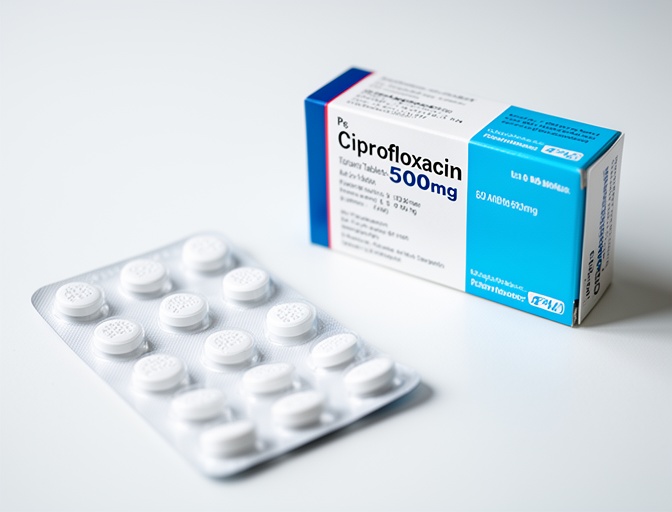
Understanding the exact composition of Cipro tablets is important for people with allergies or intolerances and for clinicians who need to check for potential excipient interactions. Mail order ciprofloxacin must list the same active and inactive ingredients as locally dispensed products, and patients should always review the package insert that accompanies their shipment.
Composition of Cipro (ciprofloxacin) tablets
The typical composition of a standard ciprofloxacin film-coated tablet includes both the active antimicrobial compound and a number of excipients that form the tablet core and coating. A common strength used for systemic infections is the 500 mg tablet.
Active ingredient (per tablet):
- ciprofloxacin hydrochloride monohydrate – 590 mg, which corresponds to 500 mg of pure ciprofloxacin base.
Excipients (tablet core):
- corn starch and pregelatinised starch (type 1500) – used as fillers and disintegrants to help the tablet break apart after swallowing;
- lactose monohydrate – a common filler; patients with severe lactose intolerance should be aware of its presence;
- microcrystalline cellulose – provides tablet structure and stability;
- talc and magnesium stearate – act as glidants and lubricants in tablet manufacturing;
- crospovidone – a superdisintegrant that supports rapid tablet dissolution.
Film coating:
- hypromellose;
- macrogol-4000 and propylene glycol (plasticisers that improve the coating’s flexibility);
- talc;
- copovidone;
- titanium dioxide (provides opacity and the characteristic white colour of the tablet).
All reputable mail order suppliers of ciprofloxacin provide a detailed description of these components either on the website or within the patient information leaflet included in the parcel, so that you can cross-check the formulation with the one prescribed by your healthcare professional.
Pharmacological characteristics of ciprofloxacin
Ciprofloxacin is a slightly yellowish to light yellow crystalline substance with potent bactericidal properties. “Bactericidal” means that the drug actively kills susceptible bacteria, rather than simply inhibiting their growth. This property is particularly valuable in moderate to severe infections or in cases where rapid bacterial eradication is clinically desirable.
The agent has favourable penetration into many tissues and body fluids, including the lungs, kidneys, urinary tract, prostate tissue, skin, bones, joints and the gastrointestinal tract. These distribution characteristics explain why the same active substance can be used to treat such a wide spectrum of infections in different organ systems.

When ordered via mail order services, ciprofloxacin is usually supplied as oral tablets, but topical forms (such as eye drops) may also be used in clinical practice for ophthalmic infections. Regardless of the route, the core pharmacological profile is determined by the same mechanism of action at the bacterial DNA level.
Mechanism of action: how Cipro kills bacteria
Ciprofloxacin works by inhibiting key bacterial enzymes that manage the structure and function of microbial DNA. Two enzymes are especially important:
- DNA gyrase (topoisomerase II);
- topoisomerase IV.
These topoisomerases are essential for replication, repair and recombination of bacterial DNA. By blocking their activity, ciprofloxacin causes DNA strand breakage and prevents the normal unwinding and supercoiling processes necessary for cell division. As a consequence, sensitive bacteria cannot replicate or repair genetic damage and ultimately die, leading to resolution of the infection.
A crucial clinical advantage of ciprofloxacin is that it does not target human topoisomerases at therapeutic doses. This selectivity means that human cells are largely spared from the drug’s bactericidal action, which contributes to its usefulness as an antibiotic when used according to guidelines.
Indications for use of ciprofloxacin
Ciprofloxacin is indicated for the treatment of infections caused by microorganisms that are proven or strongly suspected to be susceptible to this fluoroquinolone. Typical clinical uses include:
Urogenital and urinary tract infections
- acute and chronic cystitis;
- pyelonephritis;
- urethritis;
- bacterial prostatitis – ciprofloxacin can concentrate in prostate tissue, making it a common choice in adult males;
- complicated and uncomplicated urinary tract infections.
Respiratory tract infections
- exacerbation of chronic bronchitis;
- community-acquired or hospital-acquired pneumonia (usually as part of combination therapy);
- bacterial sinusitis, including maxillary sinusitis.
Other indications
- skin and soft tissue infections such as boils and abscesses;
- bone and joint infections (e.g. osteomyelitis);
- intra-abdominal infections, biliary tract infections and infectious diarrhoea due to pathogens like Salmonella, Shigella and enterotoxigenic E. coli;
- certain eye infections when used as ophthalmic drops.
In some situations, ciprofloxacin may be used to help prevent infections after dental procedures, surgery or traumatic injuries, depending on local resistance patterns and guideline recommendations.
Important limitation: ciprofloxacin does not have activity against viruses. It should not be used for viral illnesses such as influenza or typical acute viral upper respiratory infections, as inappropriate use in these situations contributes to resistance and exposes patients to side effects without benefit.
Bacterial resistance to ciprofloxacin
Like all antibiotics, ciprofloxacin can become less effective over time if bacteria develop resistance mechanisms. Resistance often arises gradually through multiple mutations in the bacterial genes encoding DNA gyrase and topoisomerase IV. These genetic changes alter the target sites so that ciprofloxacin can no longer bind as effectively.
Despite this, ciprofloxacin frequently retains activity against some strains that are already resistant to other antibiotic classes such as penicillins, macrolides and tetracyclines. This cross-resistance profile is one reason why ciprofloxacin is considered a valuable option in selected complicated infections. However, this benefit must be balanced with the need to preserve fluoroquinolones for cases where they are truly indicated, especially in an era of rising antimicrobial resistance globally.
Activity against microorganisms
Ciprofloxacin exhibits broad-spectrum activity against many gram-positive and gram-negative bacteria, as well as several atypical respiratory pathogens. Its spectrum typically includes:
Gram-positive bacteria
- Staphylococcus aureus (susceptible strains);
- Streptococcus pneumoniae;
- Enterococcus faecalis (with variable susceptibility).
Gram-negative bacteria
- Escherichia coli;
- Klebsiella pneumoniae;
- Pseudomonas aeruginosa;
- Neisseria gonorrhoeae;
- Salmonella and Shigella species;
- Yersinia pestis;
- Haemophilus influenzae.
In addition, ciprofloxacin is active against Legionella pneumophila, the causative agent of legionellosis. Local susceptibility patterns may vary, so clinicians often rely on antibiograms and culture results to confirm that ciprofloxacin remains an appropriate choice.

When you purchase mail order ciprofloxacin, you are typically receiving a standardised formulation whose microbiological activity has been defined in pre-marketing studies and post-marketing surveillance. Nevertheless, your prescriber should consider current resistance trends in your region before recommending Cipro as the best option for your specific infection.
Carcinogenicity, mutagenicity and effects on fertility
Extensive preclinical and clinical evaluation has examined the long-term safety of ciprofloxacin. Studies have not demonstrated reliable evidence of carcinogenicity in humans. Some in vitro laboratory tests have produced positive signals for mutagenicity, but these findings have not been confirmed in in vivo models at therapeutic exposure levels.
Ciprofloxacin does not appear to have a significant adverse effect on human reproductive function when used in adults. However, because of concerns about cartilage and joint toxicity in the developing organism, ciprofloxacin is generally avoided during pregnancy and breastfeeding unless potential benefits clearly outweigh risks. It is also typically not used as a first-line option in children under 18 years of age, except in special circumstances such as inhalational anthrax post-exposure prophylaxis or certain infections in cystic fibrosis, and then only under specialist supervision.
Contraindications and cautions for ciprofloxacin
Ciprofloxacin therapy, including when obtained via mail order services, is contraindicated in the following situations:
- known hypersensitivity or allergic reaction to ciprofloxacin, other fluoroquinolones or any component of the formulation;
- pregnancy and lactation, except when there is no safer alternative and the potential benefit justifies the risk;
- children and adolescents under 18 years of age, except for clearly defined specialist indications;
- history of epilepsy or seizure disorders;
- severe underlying psychiatric illness;
- myasthenia gravis, due to the risk of worsening muscle weakness.
Use with caution and under medical supervision in patients with:
- chronic kidney disease or liver impairment;
- cerebral atherosclerosis or other significant cerebrovascular disease;
- cardiac arrhythmias or risk factors for QT prolongation;
- current or past depression, anxiety disorders or other mental health conditions.
Before you order Cipro online, a proper medical assessment should screen for these contraindications. Legitimate mail order platforms usually include a structured questionnaire and, in many regions, a remote consultation with a healthcare professional before authorising a prescription.
Dosage and duration of ciprofloxacin treatment
After oral administration, ciprofloxacin typically begins to act within 1–2 hours, when therapeutic plasma concentrations are reached. Exact dosing and duration of treatment must always be tailored to the type and severity of infection, renal function, and local guidelines. The following durations illustrate common courses used in practice:
- Cystitis or uncomplicated gonorrhoea: often around 1 day of therapy (single-dose or short-course regimens may be used according to local recommendations);
- Pyelonephritis and other urinary tract infections: approximately 7 days;
- Pneumonia or exacerbation of chronic bronchitis: about 7–14 days;
- Osteomyelitis: may require up to 60 days of treatment;
- Streptococcal or chlamydial infections: usually at least 10 days.
For mail order ciprofloxacin, the prescribing clinician will select an appropriate dose (for example, 250 mg, 500 mg or 750 mg tablets, taken once or twice daily) and clearly indicate the course length. Patients should never shorten or extend the course without consulting a professional.
It is essential to complete the full prescribed course, even if symptoms improve early. Stopping treatment too soon increases the risk of relapse and contributes to the development of bacterial resistance.
Possible side effects of ciprofloxacin
Like all potent antibiotics, ciprofloxacin can cause adverse effects. Most are mild and reversible, but some may be serious. Commonly reported side effects include:
- gastrointestinal symptoms such as nausea, diarrhoea and abdominal pain;
- headache and dizziness;
- sleep disturbances, anxiety, or, rarely, hallucinations and mood changes;
- photosensitivity, meaning increased sensitivity of the skin to sunlight and a higher risk of sunburn;
- joint or tendon pain, particularly in older adults or those on concurrent corticosteroids.
With prolonged use, monitoring of liver and kidney function is advisable. Any sudden tendon pain, swelling or difficulty moving a joint should prompt immediate cessation of the drug and urgent medical review, as fluoroquinolones are associated with tendinopathy and, rarely, tendon rupture.
Ordering Cipro online: mail order ciprofloxacin considerations
Mail order ciprofloxacin has become a convenient option for many adults with legitimate prescriptions who want to avoid repeated visits to a physical pharmacy. When you look for the best deal on Cipro online, focus first on safety and regulatory compliance, then on price.

This article highlights that offers from reputable partner pharmacies can provide cost savings, discreet packaging and delivery directly to your home. Many patients who have previously used Canadian or international pharmacies appreciate the potential price advantages. However, Cipro remains a prescription-only medicine in many jurisdictions, and self-treatment without professional guidance is strongly discouraged.
Key points when considering mail order ciprofloxacin include:
- verify that the pharmacy is licensed and operates within recognised regulatory frameworks;
- ensure that a valid prescription and medical assessment are part of the process, even if conducted online;
- compare prices transparently and review independent customer feedback about medicine quality and delivery reliability;
- avoid websites that offer ciprofloxacin without any medical questions or that promote it as a cure-all for viral infections.
Buying medications via mail order can be safe and efficient when these safeguards are followed, giving you convenient access to Cipro at competitive pricing while maintaining appropriate clinical oversight.
Drug interactions with ciprofloxacin
Ciprofloxacin has several clinically important interactions that patients and prescribers should review before initiation, particularly when treatment is arranged through mail order pharmacies where the prescriber cannot directly examine the patient. Notable interactions include:
- Theophylline, warfarin, cyclosporine and caffeine: ciprofloxacin can elevate plasma levels of these substances, increasing the risk of toxicity or excessive anticoagulation. Regular monitoring of drug levels and coagulation parameters (INR for warfarin) may be required, and dose adjustments may be necessary.
- Antacids and iron supplements: products containing aluminium, magnesium, calcium or iron can bind ciprofloxacin in the gastrointestinal tract and significantly reduce its absorption. To minimise this effect, ciprofloxacin should be taken at least 2 hours before or 4 hours after such agents.
Always provide your mail order pharmacy and prescribing clinician with a complete list of medicines, over-the-counter products and supplements you are taking so they can screen for possible interactions.
Storage conditions for ciprofloxacin
To maintain the stability and potency of mail order ciprofloxacin once it arrives at your home, follow the standard storage recommendations:
- store at a temperature not exceeding 25 °C, unless the packaging specifies a different range;
- keep the tablets in a dry place, protected from moisture and direct sunlight;
- store all medicines out of the reach and sight of children;
- observe the stated shelf life, usually between 2 and 4 years depending on the manufacturer, and do not use tablets past their expiry date.
Responsible use of ciprofloxacin and final remarks
Ciprofloxacin (Cipro) is a powerful and effective antibiotic, but its benefits are maximised only when used appropriately under medical supervision. Incorrect self-selection of indications or premature discontinuation of therapy can lead to infection relapse and the emergence of resistant bacterial strains.
Current international guidelines emphasise a balanced and cautious approach to the use of fluoroquinolones, reserving them for situations where safer, narrower-spectrum agents are not suitable or have failed. This is especially true for mild, uncomplicated infections, where alternative antibiotics may be equally effective with a more favourable risk profile.
When you consider mail order ciprofloxacin, treat the process as an extension of standard medical care rather than a shortcut around it. Ensure that you receive clear instructions on dosage, duration, interactions and side effects, and contact a healthcare professional promptly if you experience unexpected symptoms or if your condition does not improve as anticipated.